
Introduction: Why Digital Transformation is Harder for SMEs Than It Looks
For many SMEs, digital business transformation is no longer optional - it is essential for survival. However, unlike large enterprises, small and medium-sized businesses often operate with limited resources, lean teams, and legacy processes that are difficult to change.
While the promise of digital transformation is compelling - greater efficiency, improved customer experience, and new growth opportunities - the reality is often far more complex.
The biggest challenge is not the technology itself, but the constraints under which SMEs must operate.
👉 To understand the broader strategic context, you can explore our digital transformation for enterprises in 2026 guide.
The Reality of Digital Business Transformation for SMEs
Limited Resources, High Expectations
SMEs face a unique paradox: they are expected to innovate quickly, yet they lack the financial and human resources of larger organizations.
Investing in new technologies, hiring skilled talent, and managing transformation initiatives can place significant strain on already limited budgets. As a result, many SMEs struggle to balance short-term operational needs with long-term transformation goals.
Competing Priorities and Operational Pressure
Unlike large corporations, SMEs cannot afford to pause operations to focus on transformation. Day-to-day business demands often take priority, leaving little time or capacity for strategic initiatives.
This creates a situation where transformation is continuously delayed - not because it is unimportant, but because it is not urgent enough compared to immediate operational needs.
Key Challenges of Digital Business Transformation for SMEs
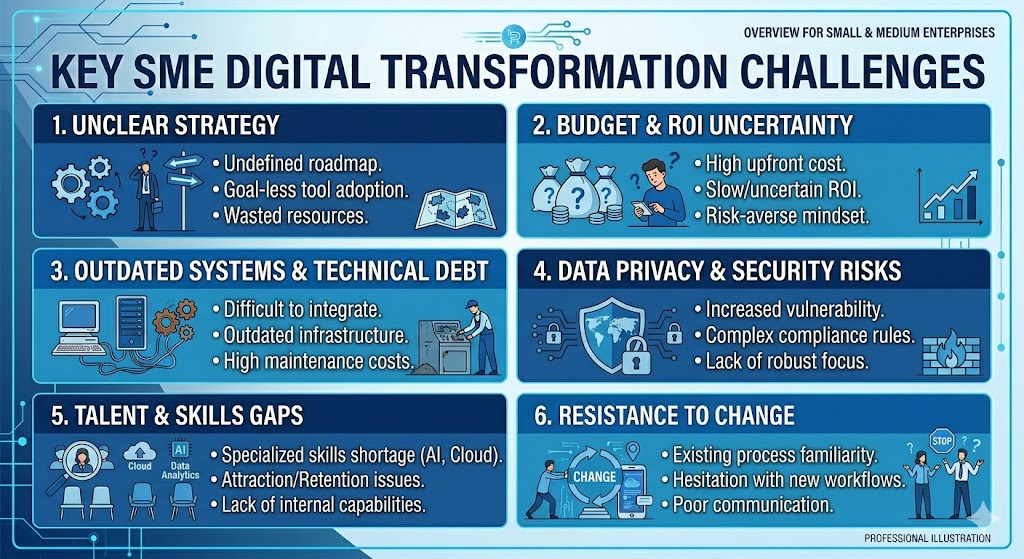
Lack of Clear Strategy
One of the most common challenges is the absence of a well-defined transformation strategy. Many SMEs adopt digital tools without a clear understanding of how these investments support their business goals.
Without a strategic roadmap, transformation efforts become fragmented, leading to wasted resources and limited impact.
👉 This is why understanding digital business transformation at a strategic level is critical before investing in technology.
Budget Constraints and ROI Uncertainty
Digital transformation often requires upfront investment, while the return on investment may not be immediate.
For SMEs, this creates a major barrier. Decision-makers may hesitate to invest in initiatives without clear, short-term ROI, even if the long-term benefits are significant.
This risk-averse mindset can slow down or completely halt transformation efforts.
Legacy Systems and Technical Debt
Many SMEs rely on outdated systems that were not designed for integration or scalability. These legacy systems can make it difficult to adopt new technologies or connect different parts of the business.
Over time, this creates technical debt, where maintaining existing systems becomes more costly than replacing them.
Talent and Skill Gaps
Digital transformation requires specialized skills in areas such as data analytics, cloud computing, and AI. However, SMEs often struggle to attract and retain this talent due to budget limitations and competition from larger organizations.
As a result, many businesses lack the internal capabilities needed to execute transformation effectively.
Resistance to Change
Even in smaller organizations, change can be difficult. Employees may be accustomed to existing processes and hesitant to adopt new systems or workflows.
Without proper communication and support, this resistance can slow down implementation and reduce the effectiveness of transformation initiatives.
How SMEs Can Overcome These Challenges
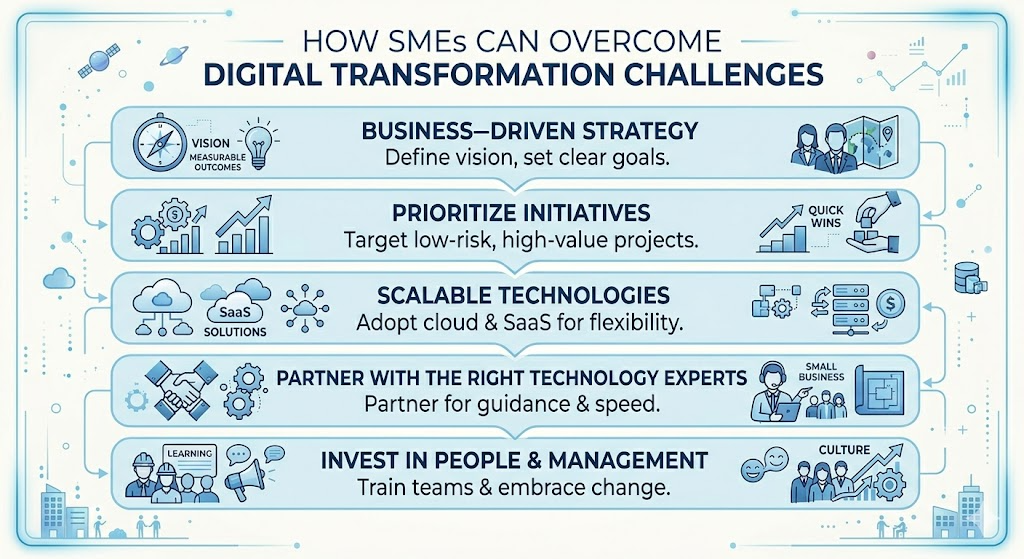
Start with a Clear, Business-Driven Strategy
The first step is to define what transformation means for the business. Instead of focusing on technology, SMEs should identify their key objectives—whether it is improving customer experience, increasing efficiency, or expanding into new markets.
A clear strategy helps ensure that every initiative is aligned with measurable outcomes.
Prioritize High-Impact, Low-Risk Initiatives
Given limited resources, SMEs should avoid large-scale transformations at the outset. Instead, they should focus on smaller initiatives that deliver quick wins.
These early successes help build confidence, demonstrate value, and create momentum for larger projects.
Transformation is not about doing everything at once—it is about doing the right things first.
Leverage Scalable Technologies
Cloud-based solutions and SaaS platforms offer a cost-effective way for SMEs to adopt modern technologies without large upfront investments.
These tools provide flexibility, scalability, and faster implementation, making them ideal for businesses with limited resources.
Partner with the Right Technology Experts
Rather than building everything in-house, SMEs can accelerate transformation by working with experienced partners. External experts bring both technical expertise and strategic guidance, helping businesses avoid common pitfalls.
👉 Learn how technology partnerships support transformation in our core technologies behind digital transformation guide.
Invest in People and Change Management
Successful transformation is not just about systems—it is about people. SMEs must invest in training, communication, and support to help employees adapt to new ways of working.
Creating a culture that embraces change is essential for long-term success.
From Challenge to Opportunity: A New Perspective
While the challenges of digital business transformation for SMEs are significant, they also present opportunities.
Unlike large enterprises, SMEs are often more agile. They can make decisions faster, adapt more quickly, and experiment with new approaches without the constraints of complex organizational structures.
This agility can become a powerful competitive advantage when combined with the right transformation strategy.
Conclusion: Turning Constraints into Competitive Advantage
Digital business transformation is not easy - especially for SMEs. Limited resources, legacy systems, and organizational challenges can make the journey complex and uncertain.
However, these constraints do not make transformation impossible. In fact, they can drive smarter, more focused decision-making.
By starting with a clear strategy, prioritizing the right initiatives, and leveraging external expertise, SMEs can turn transformation challenges into opportunities for growth.
👉 If you are planning your next steps, revisit our complete guide to digital transformation for enterprises in 2026 to align your strategy with long-term success.

